


blog
How Cognexo increases awareness and readiness for new Consumer Duty regulations
The FCA's Consumer Duty regulations outline how consumers should be treated by businesses...
Read more




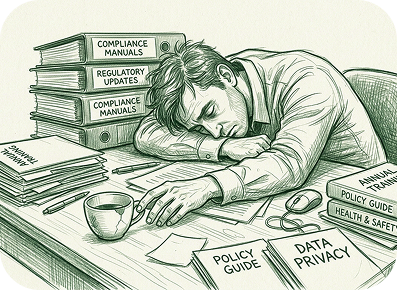
Compliance training has long been the workplace equivalent of watching paint dry. Employees in regulated industries — finance, healthcare and professional services — often slog through mandatory sessions, tick the boxes and then promptly forget everything. Studies indicate that without reinforcement, learners forget up to 70% of new information within 24 hours and over 80% within a few weeks. The check-the-box mentality persists because traditional systems prioritise completion over comprehension.
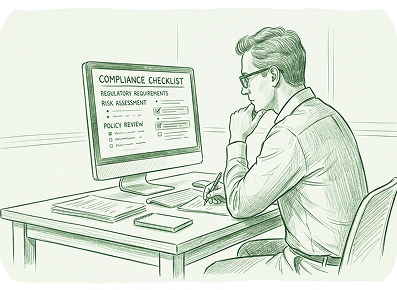
Many compliance programmes still rely on the "spray and pray" method: inundate employees with static content, administer generic assessments and hope something sticks. Even in organisations committed to compliance, LMS-driven content often delivers the same experience to all employees regardless of role, risk exposure, or prior knowledge. In a world where regulations are constantly evolving and remote work is the norm, compliance training must become more dynamic, more personalised and more continuous.
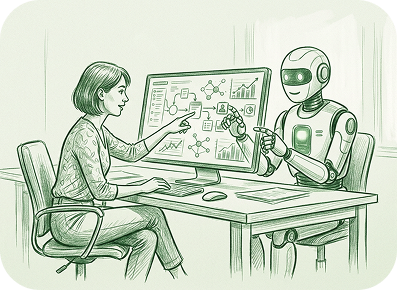
AI-driven learning solutions can: identify knowledge gaps; personalise content based on role, prior knowledge and performance; reinforce knowledge through spaced repetition; track and report in real-time on learner progress and engagement levels. This adaptive model transforms employees from passive participants into engaged learners.
The real goal of compliance learning isn't just to prove employees read the rules — it's to ensure they understand them and can apply that knowledge in their daily jobs. Question-based learning and reinforcement tools ensure employees revisit key concepts over time, strengthening neural pathways and increasing long-term retention. Instead of compliance being a once-a-year obligation, it becomes an ongoing conversation woven into daily workflows.
Engaged employees are more productive and more compliant. When employees feel their training is relevant, personalised and supportive of their growth, they take it more seriously. AI allows for continuous feedback loops — surveys and pulse checks built into AI-driven platforms give learners a voice and reveal blind spots in both training content and company culture.
The shift toward AI-powered compliance training is a necessity. Organisations that embrace smart, adaptive learning will see stronger employee engagement, better retention and reduced compliance risk. The question isn't whether you can afford to modernise your compliance training — it's whether you can afford not to.